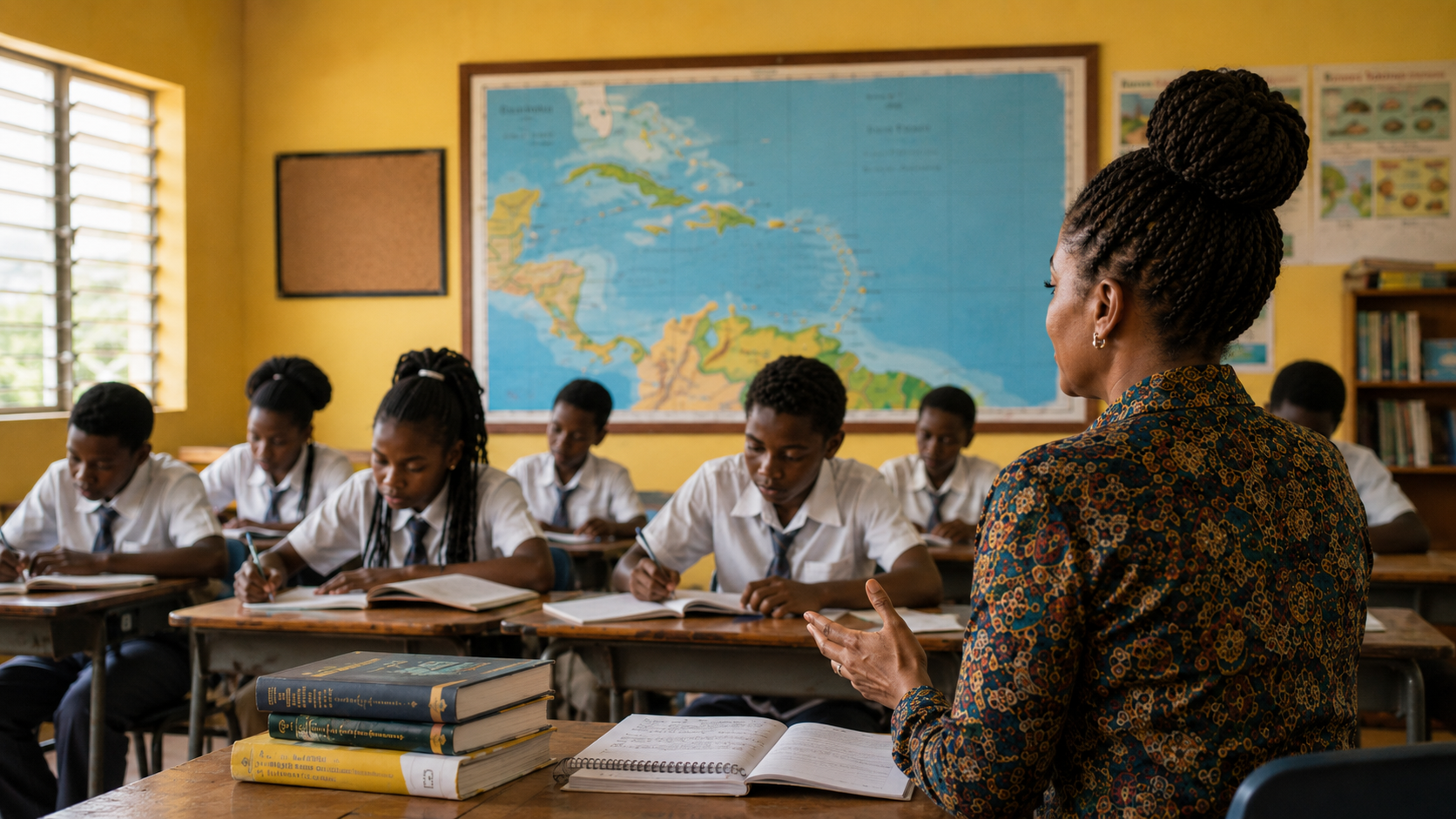
Walk into almost any Caribbean classroom and you'll find something both comforting and quietly limiting: the unmistakable echo of colonial schooling, dressed up in modern uniforms. The Caribbean teaching tradition is one of the most passionate and devoted in the world — and yet, it carries the weight of a model that was never designed with Caribbean children truly in mind.
Caribbean educators, by and large, are dedicated people. Many came up through the same rigid, examination-driven system they now teach within, and they do so with pride. The respect that teachers hold in Caribbean communities is something genuinely worth celebrating. A teacher's word carries authority. Their guidance shapes families across generations. That social trust is rare and powerful.
"Teaching in the Caribbean has always been more than a profession — it is a calling, a form of community stewardship."
Caribbean Education Task Force Report, UNESCO (2019)
But culture, however warm, can also calcify. Much of the pedagogy still dominant across the region — rote memorization, teacher-centered instruction, curriculum designed around CXC and CAPE exams — reflects an inherited British colonial model more than it reflects Caribbean life, identity, and aspiration. Students memorize dates, recite definitions, and prepare for standardized tests, often without ever being asked: What do you think? What does this mean for your community?
There's an exciting countermovement growing, however. Educators in Jamaica, Trinidad, Barbados, and across OECS nations are experimenting with culturally responsive teaching — centering local history, folklore, Creole linguistics, and Caribbean literature in their lessons. The argument isn't that the academic rigor should drop. It's that students perform better when they see themselves in the curriculum.
The teaching culture in the Caribbean is not broken — it is strong-rooted and deeply human. But like any living thing, it must be pruned and redirected if it is to flourish in new conditions. The educators who are honest enough to question what they inherited, while honoring its strengths, are exactly who the region's students need right now.
References
- UNESCO (2019). Education in the Caribbean: Challenges and Opportunities. Caribbean Education Task Force Report.
- Jules, D. (2010). Rethinking Education for the Caribbean. Prospects, 40(3), 259–272.
- Miller, E. (1999). Education for All in the Caribbean in the 1990s. UNESCO/OREALC.